





Your entryway rug works harder than any other rug in your home. It catches dirt from shoes, gets wet on rainy days, sits under a door that opens dozens of times a day, and is the first thing guests see. That's why the "best" entryway rug isn't the softest or the thickest. It's the one built for the job.
This guide compares the five things that matter most: pile height, backing, material, size and shape. It also explains the difference between an outdoor doormat and an indoor entryway rug, and why most homes need both.
Quick answer
The best rug for an indoor entryway is low-pile (about 1/4 inch thick so the door can open over it), has a non-slip backing, is machine washable, and is sized to leave a few inches of floor showing on each side. Use a tough coir or rubber doormat outside the door, and a washable rug inside.
Entryway Rug Comparison at a Glance
| Feature | Best choice for an entryway | Avoid |
|---|---|---|
| Pile height | Low pile, about 1/4 inch total | Shag or plush rugs that catch the door |
| Backing | Built-in non-slip grip backing | Smooth backs that slide on tile or wood |
| Cleaning | Machine washable | "Spot clean only" or dry-clean rugs |
| Size | Wider than the door, with floor showing around it | Tiny mats that look lost, or wall-to-wall rugs |
| Color | Mid-tones, patterns and borders that hide dirt | Solid white or very light plain rugs |
1. Pile Height: Why Low Pile Wins at the Door
Pile height is how tall the rug's fibers stand. In a living room, a thick, plush rug feels great. At the front door, it causes problems: the door scrapes or catches on it, the rug bunches up, and deep pile traps dirt and sand.
A low-pile rug stays flat, lets the door swing over it, and is easy to vacuum. Before you buy, open your front door and measure the gap between the bottom of the door and the floor. Your rug should be thinner than that gap.

A low-pile tufted surface: soft underfoot, but flat enough for the door to pass over.
Our personalized entryway rugs have a low-pile tufted surface with a total thickness of about 1/4 inch, so they fit under most front doors.
2. Backing: Non-Slip Is Not Optional
Entryways are where people move fastest: kids running in, dogs rushing to the door, someone carrying groceries. A rug that slides on tile, wood or laminate is a real safety risk, especially when shoes are wet.
- Non-slip grip backing: the best option. The grip is built into the rug, so it stays put without extra pads.
- Rug pad underneath: works, but adds thickness (bad for door clearance) and can shift when you wash the rug.
- No backing / smooth back: avoid near doors.
RugMatters rugs use a micro-grip non-slip backing made of natural cotton reinforced with recycled fibers, so they stay in place on hard floors without a separate pad.
3. Material: What Your Entryway Rug Is Made Of
| Material | Good for | Watch out for |
|---|---|---|
| Washable tufted rugs | Indoor entryways, pets, kids, easy cleaning, printed designs | Check the washer size you need for larger rugs |
| Wool | Durability and a soft, natural feel | Usually not machine washable; can be costly to clean |
| Cotton flat-weave | Thin, light rugs | Often slides and wrinkles without a pad |
| Jute / sisal | Natural texture, dry areas | Stains easily from water and mud; hard to clean |
| Coir or rubber | Outdoor doormats that scrape shoes | Too rough and plain for indoor use |
For most homes, a washable rug is the most practical choice inside the front door: it handles mud, rain and paw prints, and goes in the washing machine when it gets dirty. Not sure your washer is big enough? Check our Rug Weight & Washer Fit Guide.
4. Size: Bigger Than a Doormat, Smaller Than the Room
The most common mistake is buying a rug that's too small. A tiny mat in a wide entry looks lost, and people step right past it, so it doesn't catch the dirt. As a rule:
- The rug should be at least as wide as the door, ideally a little wider.
- Leave a few inches of floor showing between the rug and the walls or furniture.
- Make sure the door can open fully without touching the rug's edge.
| Your entryway | Try this size |
|---|---|
| Small entry or apartment door | 3' x 5' or 3' x 3' square |
| Long, narrow hallway entry | Runner rug, 2.5' wide in lengths from 5' to 10' |
| Standard foyer | 4' x 6' or 5' x 7' |
| Large or open foyer | 5' x 8' or a round rug in the center |
For step-by-step measuring tips, read our full guide: How to Choose the Right Rug Size for Your Entryway.
5. Shape: Match the Rug to the Space


The same design, Midnight Gold, in four shapes.
- Rectangle (area rug): the classic choice, and the right shape for most entryways and foyers.
- Runner: best when the entry is a long, narrow hallway. It guides people in and covers the walking path.
- Square: fits small, square entries and mudroom corners where a rectangle would look stretched.
- Round: softens a large open foyer with lots of straight lines, especially under a center table or light.
Doormat vs. Indoor Entryway Rug: Do You Need Both?
They do different jobs, and the cleanest homes use both.
| Outdoor doormat | Indoor entryway rug | |
|---|---|---|
| Where | Outside the door, on the porch or step | Inside, just past the door |
| Job | Scrapes off mud, snow and grit | Catches leftover dirt and moisture, protects floors, looks good |
| Material | Coir, rubber, rough fibers | Soft, low-pile, washable |
| Size | Small, about the width of the door | Larger, sized to the entry |
| Cleaning | Shake out or hose off | Vacuum, and machine wash when needed |
A coarse doormat outside does the heavy scraping. The indoor rug catches what's left, keeps your floors safe from scratches and water, and sets the style for your home.
Make It Personal
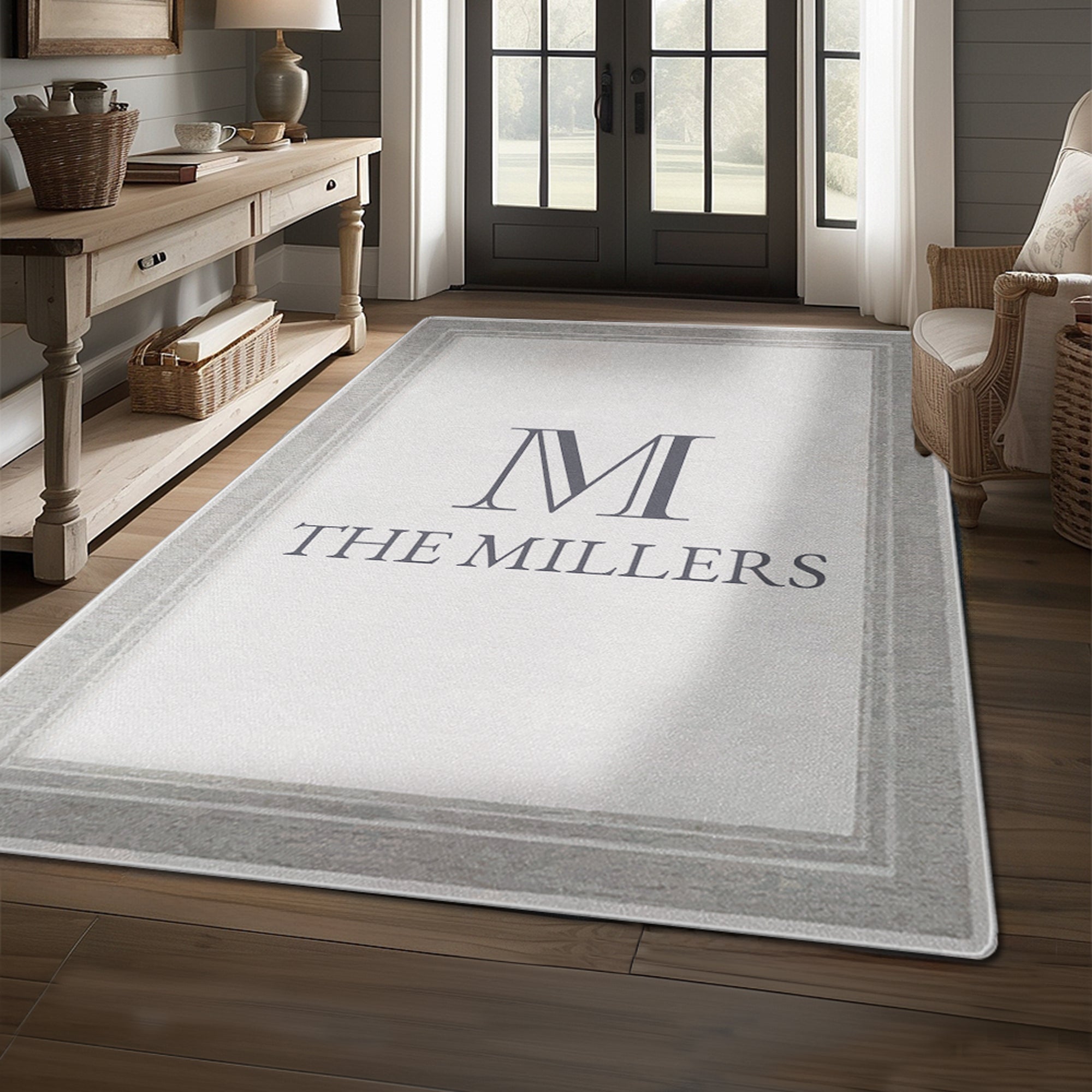
Because the entryway rug is the first thing guests see, it's the perfect place for a personal touch. A rug with your family name, initial or a welcome message turns a practical piece into something people remember.

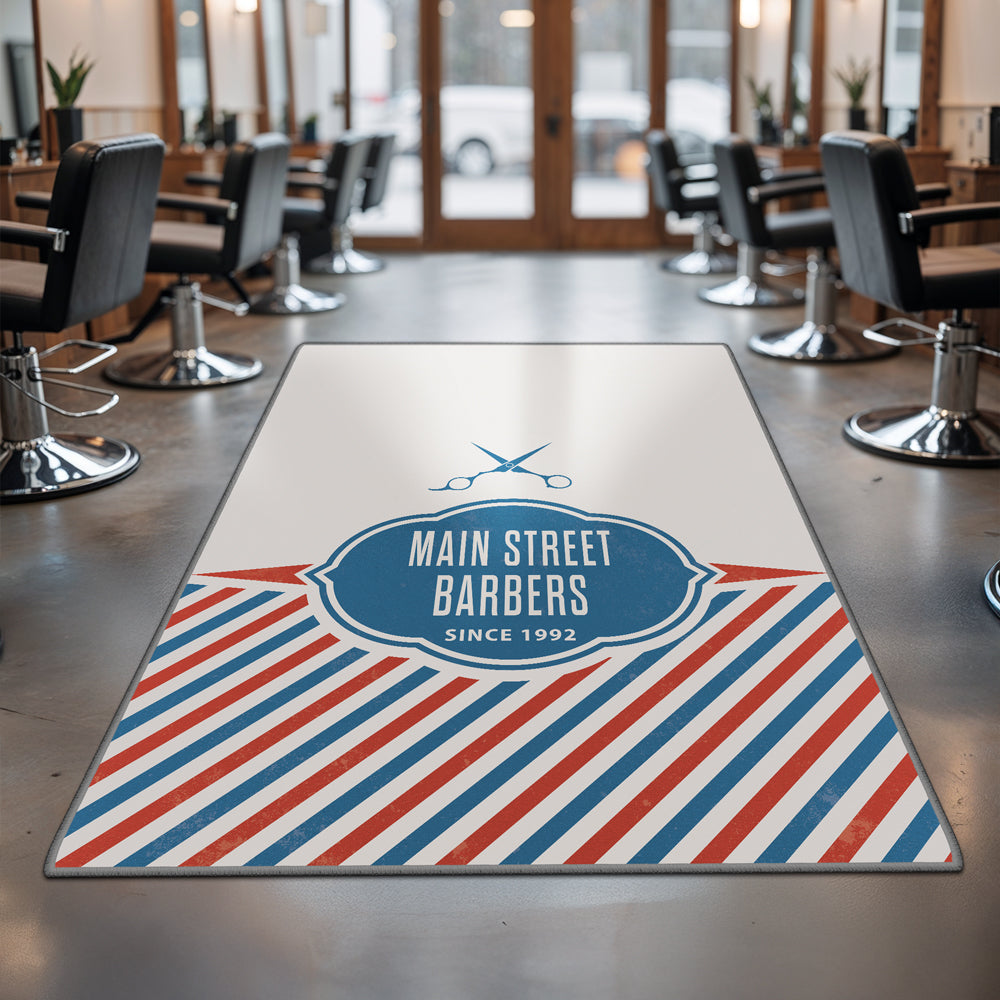
Browse our personalized entryway rugs and add your own name or text. Every design is washable, non-slip and made to order. Need one for a shop, office or café? Our custom logo rugs let you upload your logo and preview it live before you order.

Quick Checklist Before You Buy
- ✔ Measured the gap under your door, and the rug is thinner than it
- ✔ Non-slip backing built in
- ✔ Machine washable, and fits your washer
- ✔ At least as wide as the door, with floor showing around the edges
- ✔ Shape fits the space: area, runner, square or round
- ✔ A color or pattern that hides everyday dirt
Frequently Asked Questions
What type of rug is best for an entryway?
A low-pile, machine washable rug with a non-slip backing. It lets the door open freely, stays in place on hard floors, and is easy to clean when mud and rain come in.
How thick should an entryway rug be?
Thin enough to fit under your door. Measure the gap between the bottom of the door and the floor; a rug about 1/4 inch thick fits under most front doors.
Should an entryway rug be bigger than the door?
Yes. It should be at least as wide as the door, so people step on it as they come in, while still leaving some floor visible around the edges.
Can I use an indoor rug instead of a doormat?
Use both if you can. A rough doormat outside scrapes off most of the dirt, and a washable rug inside catches the rest and protects your floors.
Are washable rugs good for entryways?
Yes. The entryway gets dirtier than any other spot in the home, so being able to put the rug in the washing machine makes it much easier to keep clean. Read more in our Washable Entryway Rugs Buying Guide.

